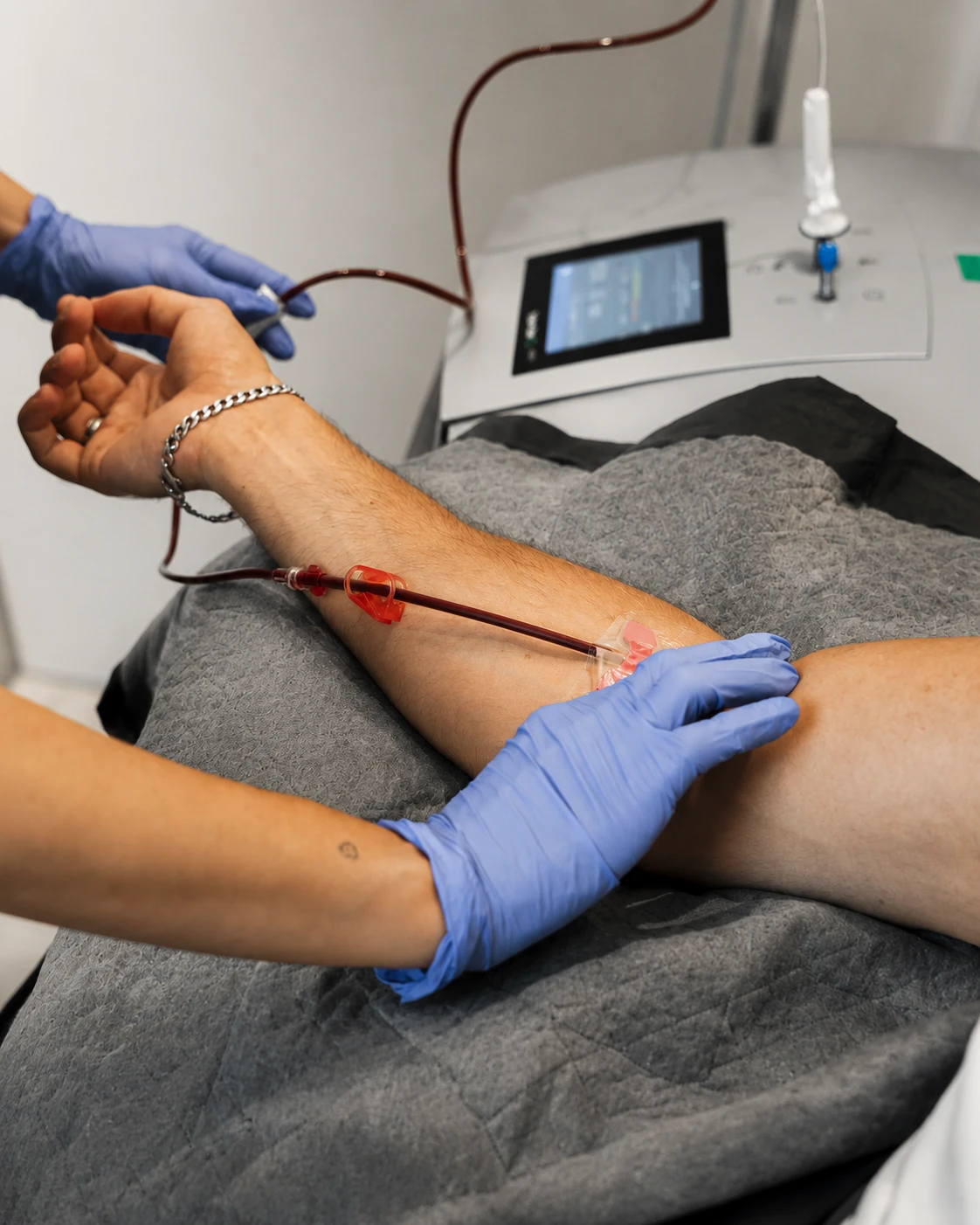
An individually agreed programme with pre-treatment blood testing, five planned sessions and medical care. Before starting, we discuss your health circumstances, the specific method and its limitations.
In complementary medical practice, ozone autohaemotherapy is used as an adjunct in areas including:
Persistent exhaustion and fatigue
Ongoing symptoms after infections, including post-COVID
Selected circulatory disorders
Chronic inflammatory symptoms
Your practical benefits
Personal medical review of your symptoms and previous treatments.
An individually discussed plan with preparatory blood testing, five planned applications and medical care.
Agreed personal goals and review of your wellbeing during the course.
Our medical team determines whether the programme is appropriate for you based on your symptoms, diagnosis, existing findings and previous treatment. Together, we discuss your personal goal, expected benefit and possible risks.
Medical sources+
These areas describe complementary use of ozone autohaemotherapy, not established indications for high-dose treatment. Early fatigue and post-COVID studies report signals, but different protocols and limited study designs do not establish efficacy for this high-dose programme. The six-person Lahodny pilot measured laboratory parameters, not clinical rejuvenation or stem-cell activation. It carries an editorial note on consent and conflicts of interest.
Sources address the described assessments and individual procedures. They do not validate the complete IUNE package.
IUNE offers high-dose ozone therapy as a complementary procedure. The specific protocol and method are explained beforehand. The term “high-dose” does not establish greater effectiveness.
Medical assessment
We review existing conditions, medicines and individual risks in your personal context.
Pre-treatment blood tests
Discuss which tests are required before starting and what the results mean.
Preparation & delivery
The medical team explains the procedure, planned monitoring and advice for after each session.
PERSONAL MEDICAL CARE
Your questions. Clear answers.
Dr. Alejandra Pérez Campuzano discusses your goals and medical circumstances. Informed decision-making, individual suitability and coordinated follow-up are central to your care.
Dr. Alejandra Pérez CampuzanoGeneral medicine · Functional & integrative medicine
THE PLANNED PROGRAMME
Blood testing
Selected blood tests are performed and reviewed before treatment begins.
Five planned sessions
The programme proposes five applications. Whether and how often they take place depends on medical assessment and your course.
Medical support
Questions, changes in how you feel and further steps are discussed personally. The plan is adjusted where necessary.
The procedure does not replace necessary standard treatment. Clinical benefit is not adequately established for many promoted uses; this is considered during informed consent.
YOUR PROGRAMME IN PALMA
Your programme at IUNE.
Consultation & existing results
Bring medical reports, recent laboratory results and a complete medication list. Discuss your concerns and alternatives.
Assessment & planning
Following medical assessment, blood tests, informed consent and possible appointments are coordinated.
Sessions & review
Your wellbeing is considered before and after applications. Required monitoring or changes are determined medically.
Services, costs and appointments are agreed in writing beforehand. Five planned sessions are not an automatic treatment commitment or guarantee of success.
BEFORE YOU ENQUIRE
Your questions about ozone therapy.
Is effectiveness scientifically established?+
Clinical benefit is not adequately established for many promoted uses. We discuss the evidence for your concern and established alternatives.
What does “high-dose” mean?+
The term describes the offered protocol. The specific method is explained during informed consent; a higher dose does not automatically mean greater benefit.
Is it suitable for everyone?+
No. Existing conditions, medicines and personal risks require assessment. Suitability is decided individually.
Which risks should I know?+
Risks depend on the method. They may include reactions to blood withdrawal or reinfusion, circulatory symptoms and infection. Procedures involving blood treatment also require consideration of clotting and possible haemolysis risks. Personal informed consent precedes your decision.
COMPLEMENTARY MEDICINE · IUNE PALMA
Let us discuss your questions.
Tell us why you are considering the programme. We will arrange a personal consultation and explain which previous results are needed.