

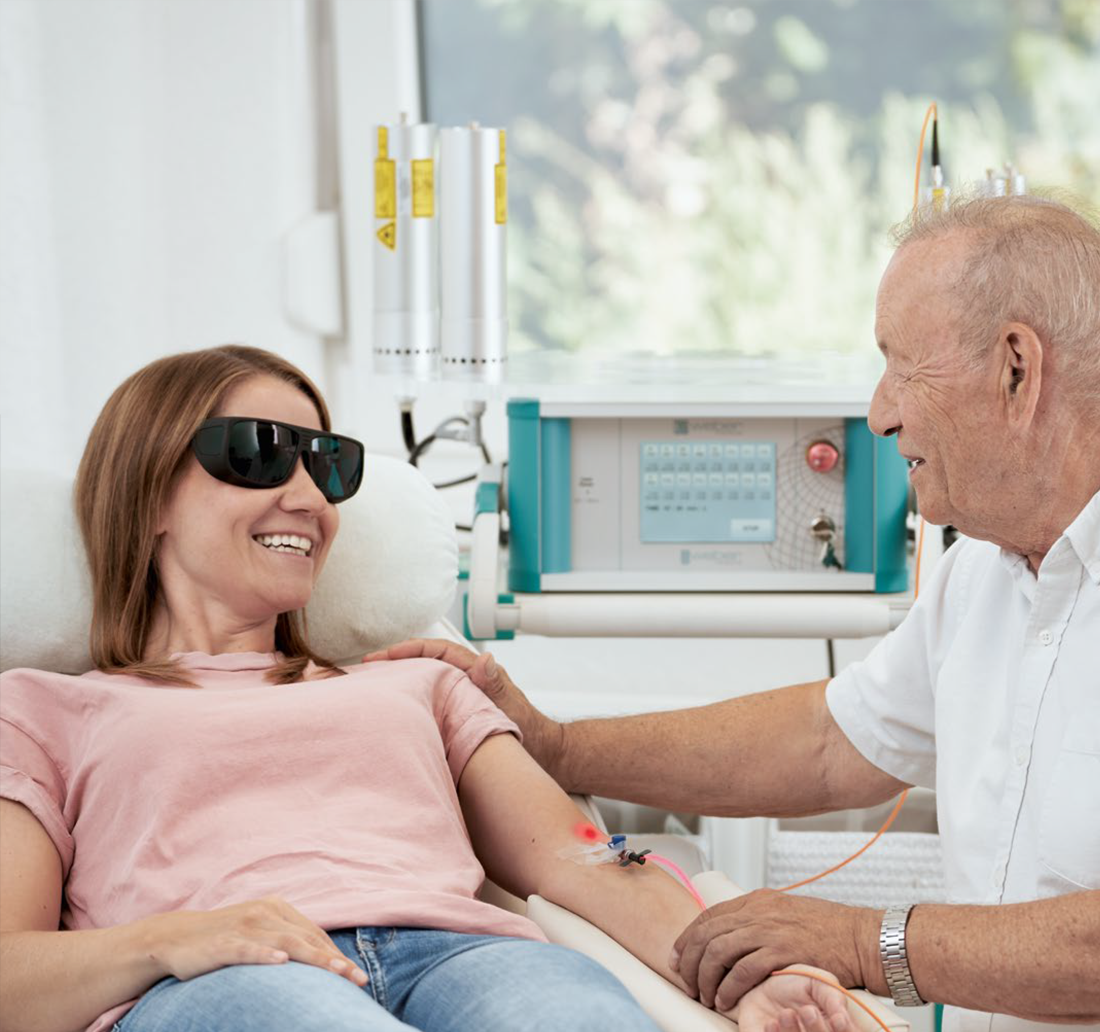
Weberneedle® Endolaser at the IUNE Medical Center-
Patient information: Procedure, areas of application, safety
The Weberneedle® Endolaser is a medical laser system that delivers targeted light with different colors (wavelengths) into the body - intravenously (IV) into the blood, interstitially/intra-articularly into tissue or joints and non-invasively externally (incl. transcranially for head/brain regions). The aim is to activate metabolic and regeneration processes and modulate inflammation.
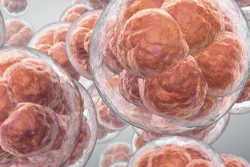
Briefly explained: Certain cell components (chromophores) absorb light. Among other things, this increases energy production in the cells (ATP) and triggers signaling processes that can promote blood circulation and healing.
What is the therapy used for?
What is the therapy used for?
The following fields of application, among others, result from the manufacturer and study material (individual medical examination required):
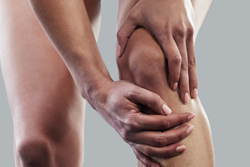
- Pain & movement: muscular/musculoskeletal complaints, joint inflammation, tendinopathies. 
- Neurology/psyche: e.g. migraine; additional applications for neurodegenerative diseases are described. 
- Skin: e.g. wound healing, acne, neurodermatitis (also photodynamic, see below). 
- microcirculation/metabolism: indications of effects on circulation and metabolism issues. 
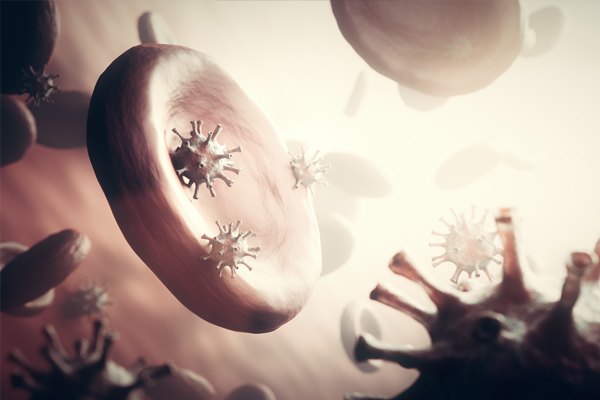
- Infectiological settings (aPDT): Light activates a photosensitizer (e.g. riboflavin, curcumin, hypericin) to specifically inactivate germs - as antimicrobial photodynamic therapy (aPDT). 
Important: The suitability and combination with standard procedures is assessed by the doctor on a case-by-case basis.
What treatment options are there - and how do they work?
1) Intravenous laser therapy (IV)
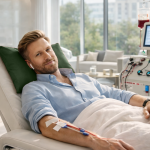
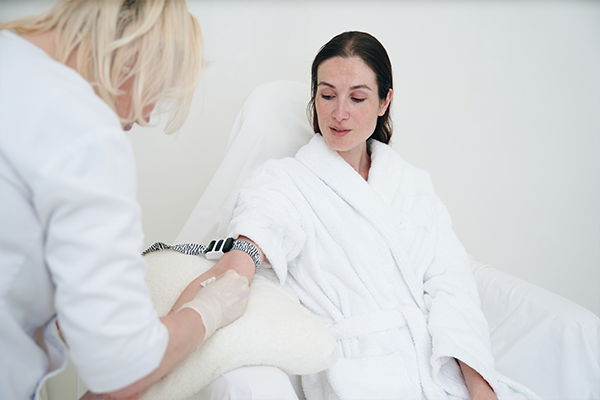
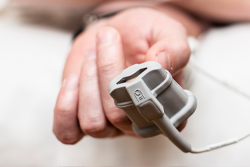
- Procedure: After inserting a small cannula, a fine light guide is inserted and connected to the laser; you lie/sit relaxed. 
- Duration: Usually approx. 60 minutes; often several colors are used for 10-15 minutes each ("rainbow protocol"). 
- Recommendation depending on the objective: often 3× per week, 10 sessions (number varies).
2) Interstitial / intra-articular application (tissue/joint)
- Procedure: After local anesthesia, a fine needle (2-12 cm) is placed; the light guide delivers the energy directly to the target structure. If necessary, a small amount of saline solution is administered so that the light spreads better.
- Series: typically 3× per week, 10 sessions.
What treatment options are there - and how do they work?
1) Intravenous laser therapy (IV)
- Procedure: After inserting a small cannula, a fine light guide is inserted and connected to the laser; you lie/sit relaxed. 
- Duration: Usually approx. 60 minutes; often several colors are used for 10-15 minutes each ("rainbow protocol"). 
- Recommendation depending on the objective: often 3× per week, 10 sessions (number varies).
2) Interstitial / intra-articular application (tissue/joint)
- Procedure: After local anesthesia, a fine needle (2-12 cm) is placed; the light guide delivers the energy directly to the target structure. If necessary, a small amount of saline solution is administered so that the light spreads better.
- Series: typically 3× per week, 10 sessions.
3) Non-invasive (from the outside) & transcranial
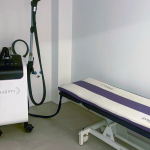
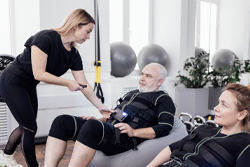
- Procedure: Laser applicators ("light mats", diodes/laser showers) are placed on the skin/treatment area from the outside; special adapters are used for the head.
- Duration/series: often 20 minutes per session, 3× per week, 10 sessions.
Photodynamic therapy (aPDT) - what does it mean?
In aPDT, a light-sensitive agent is administered, which preferentially accumulates at the target (e.g. germs or tumor tissue). It is then irradiated with the appropriate color of light, which produces reactive oxygen species (ROS) that damage the target cells. Examples of photosensitizers: riboflavin (Vit. B2), curcumin, hypericin, chlorin E6, indocyanine green (ICG), 5-ALA.
Typical aPDT schemes (extract) are described in protocols, e.g. riboflavin IV, then blue/UV at fixed times.
How does the treatment feel?
The vast majority of patients find the sessions calm and well tolerated; the IV treatment is carried out in a lying/sitting position with no downtime afterwards.
Which colors (wavelengths) are used?
The system covers UV, blue, green, yellow, red and infrared. Each color has its own effect profile - e.g. red for cell activity/immune system, infrared for deep tissue, blue/UV with antimicrobial effects, green for oxygen binding/hemoglobin, yellow with mood/detox-related indications. The doctor determines which combination is appropriate.
Safety, education and approval
- Europe (CE): The system is CE-certified in Europe; it is a low-level laser (laser class 3B).
- Tolerance: Serious side effects are described as very rare in the available materials; medical information and consent are obtained in advance.
- Transparency note: In the USA, there is FDA approval for external laser therapy; IV application is considered off-label there.
Note: Laser therapy does not replace emergency or standard therapies. It is used at the IUNE Medical Center in a complementary manner and under medical supervision - with a clear risk-benefit assessment.
Safety, education and approval
- Europe (CE): The system is CE-certified in Europe; it is a low-level laser (laser class 3B).
- Tolerance: Serious side effects are described as very rare in the available materials; medical information and consent are obtained in advance.
- Transparency note: In the USA, there is FDA approval for external laser therapy; IV application is considered off-label there.
Note: Laser therapy does not replace emergency or standard therapies. It is used at the IUNE Medical Center in a complementary manner and under medical supervision - with a clear risk-benefit assessment.
Frequently asked questions
How long does a session last?
Usually around 60 minutes (several colors, 10-15 minutes each). 
How many sessions do I need?
This depends on the goal; series of 10 sessions (e.g. 3×/week) are often planned. 
Does it hurt?
With IV or interstitial applications, you will feel the prick of the cannula/needle; the actual light application is usually well tolerated. 
Which active ingredients are used in aPDT?
For example riboflavin, curcumin, hypericin, chlorin E6, ICG or 5-ALA - the choice and dosage is determined by the doctor. 
Is there any downtime?
Generally no; you can usually resume your normal daily routine afterwards.
Next steps
Would you like to know whether the Weberneedle® Endolaser is right for you? Schedule a medical consultation at the IUNE Medical Center. We will discuss your goals, review IV, interstitial/intra-articular, non-invasive and possibly photodynamic options, explain the procedure and create a customized treatment plan.
(This patient information summarizes manufacturer and training material and does not replace a personal consultation with a physician).